Industries Most Likely to Be Replaced by AI (Based on Microsoft Research)

Industries are reacting to AI in real time. Some are doubling down on automation, others are doubling down on people. The impact isn’t equal across the board.
So let’s take a look at which industries are most and least at risk of AI replacement. This gallery breaks down the exposure, job numbers, and what the data says about where AI is headed next.
👉 Click or Scroll to see which industries AI is actually coming for (and which ones are safe, for now).
Table of Contents
How the Study Measured AI Risk Across Industries

Not all industries face the same level of AI disruption. A recent Microsoft study measured AI Applicability Scores across 21 major job groups, scoring how much of each industry’s work could realistically be automated.
Microsoft’s research included factors like automation, digital workflows, and real-world job tasks. Combined with job counts across millions of workers, it paints a clear picture of which industries are most likely to be impacted first.
👉 Keep reading to see where your industry ranks, starting with the most at risk.
Sales and Related Jobs: Industry Most at Risk to AI Replacement

Sales jobs have the highest exposure right now, with an AI Applicability Score of 0.32 across 13.3 million roles. These jobs are full of repetitive tasks, answering questions, writing emails, explaining products, and AI handles them with ease.
It’s not about charm. It’s about scale. AI can write 100 follow-ups in seconds, and that’s why this field is first in line.
20 Jobs Most at Risk of Being Replaced by AI, According to Microsoft Research
Computer and Mathematical Careers: High Risk of AI Disruption

There are about 5.2 million jobs in this field, and it’s already being reshaped. The AI Applicability Score here is 0.30, with AI proving strong at writing code, spotting bugs, and explaining models.
According to Stack Overflow, 84% of developers now use or plan to use AI tools, an increase from last year (74%). The tools are already part of the job, and they’re only getting better.
Office and Administrative Support: Jobs Facing Major AI Replacement

AI is already doing the paperwork. This category covers 18.2 million jobs, with an AI Applicability Score of 0.29. Email writing, scheduling, form processing, AI tools can handle them all, often faster than a human.
This is one of the biggest job categories in the country, and the overlap with AI is hard to ignore. These tasks aren’t future targets, they’re current ones.
The 17 Industries With the Highest Burnout Rates (Is Yours on the List?)
Community and Social Service Careers: Increasing AI Involvement

This one surprises people. With 2.2 million jobs and an AI Applicability Score of 0.25, social services still rely on people, but the admin side is shifting. AI is already writing notes, summarizing records, and researching programs.
Microsoft found AI helped a lot behind the scenes. The human connection still matters, but AI is already handling the prep work.
Creative Industries: Arts, Media, and Design Jobs at AI Risk

Writers, editors, and designers aren’t immune. Across 2 million creative jobs, the AI Applicability Score is 0.25. AI tools are already generating headlines, mockups, ad copy, and basic design templates.
This is one of the first fields hit by generative AI. If speed and volume matter more than originality, AI is already competitive.
We also made this related Video: The College Degrees That Lead to the Highest Salaries Right Now
Financial and Business Operations: Roles Seeing Fast AI Adoption

This category covers 10.1 million jobs, with an AI Applicability Score of 0.24. AI is handling early drafts, summaries, and reports in finance, planning, and analysis. Consultants in particular are adapting fast, 8 in 10 say they’re already using AI.
Microsoft’s research confirms this field is among the fastest to adopt AI tools. The decision-making stays human. But the prep work? That’s shifting fast.
Education and Library Jobs: Growing Risk of AI Integration

With an AI Applicability Score of 0.24 and 8.3 million workers, education jobs are more exposed to AI than you might expect. It’s not the teaching, it’s the planning, grading, emails, and documentation that AI can already assist with.
A Study.com survey found 84% of educators are actively using AI tools, with many planning to use even more this school year. The classroom still runs on people, but the prep is going digital.
Architecture and Engineering Careers: AI Starting to Replace Some Tasks

This field has an AI Applicability Score of 0.22, covering about 2.5 million jobs. Engineers and architects still need deep skill, but AI is stepping in for CAD drafting, blueprint reviews, and technical spec generation.
The hands-on problem-solving still needs a human. But AI is creeping into the back-end design process, one diagram at a time.
🙋♂️If you like what you are reading so far, subscribe to the DadisFIRE newsletter and follow DadisFIRE on YouTube.💪
Personal Care Jobs: Limited but Emerging AI Support

Jobs in this field total about 2.9 million, with a modest AI Applicability Score of 0.20. These are people-first roles, groomers, fitness instructors, childcare workers, where physical presence and human interaction matter.
Still, scheduling, reminders, and customer updates are already being handled by bots. The hands-on work is safe, for now.
High-Paying Jobs Most People Avoid, But Pay Over $100K
Scientific Research Roles: Mixed AI Risk Across Fields

Science roles total 1.4 million jobs with an AI Applicability Score of 0.20. AI isn’t replacing researchers, but it’s already useful for analyzing datasets, writing abstracts, and generating experiment summaries.
Microsoft’s research found moderate overlap, AI can assist but not lead. The tools are already in the lab, but they’re not running the experiments yet.
Food Service Industry Jobs: Minimal AI Impact for Now

Food-related roles make up 13.1 million jobs, one of the largest workforces, and have a low AI Applicability Score of 0.18. You can’t serve fries or bus tables with a chatbot.
Most of these jobs involve physical, real-time work. Some restaurants are testing robots, but AI still can’t match what people do in kitchens and dining rooms every day.
15 Places Where You’re Asked to Tip, But It Is Totally Optional
Management Careers: Still Safe from AI Replacement

There are 10.4 million management jobs, and the AI Applicability Score is just 0.14. These roles require judgment, leadership, and experience, things that don’t translate easily to algorithms.
AI can help draft reports or suggest KPIs, but when decisions involve people, strategy, and money, it still takes a manager to call the shots.
Protective Service Jobs: Low Risk of AI Automation

This category includes 3.4 million jobs and has an AI Applicability Score of 0.14. These are roles like police officers, firefighters, and correctional officers, work that’s dynamic, high-stakes, and judgment-driven.
AI may help in dispatch or threat assessment, but it’s nowhere close to replacing someone running into a burning building or handling a volatile situation.
15 Hard Jobs That Pay Well and Are in High Demand
Legal Industry Jobs: Surprisingly Resilient to AI Tools

There are 1.2 million legal jobs, with an AI Applicability Score of just 0.13. Even though AI tools are drafting contracts and summarizing court decisions, legal work still demands context, ethics, and nuance.
AI can prep the briefs. But reading between the lines, arguing precedent, and interpreting law? That’s still a human skill set, and it’s not being replaced anytime soon.
Healthcare Practitioners: Roles Largely Safe from AI Takeover
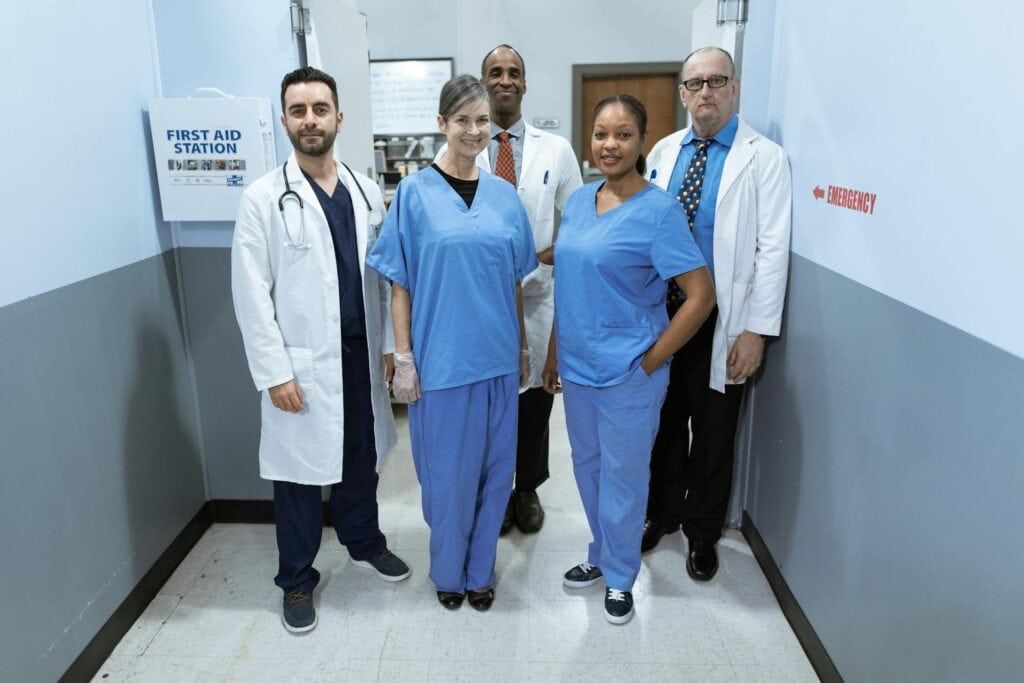
With an AI Applicability Score of just 0.12 and 9.25 million workers, healthcare practitioner roles are among the least exposed to AI disruption. These are jobs that require licensing, physical precision, and real-time decision-making, AI isn’t doing surgery or diagnosing complex conditions anytime soon.
That said, AI is being used for things like radiology image analysis and patient record summaries. But the human element is still the core of this field.
20 High Earning Jobs Likely to Build $1 Million in Savings
Repair and Maintenance Careers: AI Not a Threat Yet

Jobs in this category total 5.98 million, with an AI Applicability Score of 0.11. These are hands-on roles, electricians, HVAC techs, mechanics, that require physical skill and problem-solving on the fly.
AI isn’t climbing under your sink or rewiring your fuse box. These jobs are still technician-first, and automation is a distant threat here.
Manufacturing and Production Jobs: Minimal AI Disruption

There are 8.42 million production jobs, with an AI Applicability Score of 0.11. Factories and assembly lines already use automation, but AI has only limited reach when it comes to precision work, safety monitoring, and equipment troubleshooting.
Microsoft’s research shows this industry ranks low in AI disruption risk. Humans still run quality control and complex machinery. And in most plants, experience matters more than algorithms.
College Or Trade School: Which Path Has More Job Growth Ahead?
Transportation and Material Moving: Still Human-Driven

This massive sector covers 13.66 million jobs and has an AI Applicability Score of 0.11. Self-driving hype aside, most transport roles, like truck drivers, warehouse workers, and delivery operators, still depend on people.
AI can optimize routes and help with logistics, but steering a semi in traffic or loading freight takes more than code.
Building and Maintenance Industry: Very Low AI Risk

With 4.4 million jobs and an AI Applicability Score of just 0.08, this category includes janitors, landscapers, and building maintenance staff. These are physical, location-based roles that can’t be offloaded to bots.
Microsoft’s study places this group among the least likely to face AI-driven changes. It’s low glamour, but low risk too, this field stays firmly human.
15 Jobs That Made People Millionaires Without a College Degree
Construction Industry Careers: Among the Safest from AI

Construction employs 6.19 million people and carries an AI Applicability Score of 0.08. You won’t see a robot hanging drywall or managing a site crew anytime soon.
AI might assist with project planning or inventory tracking, but the boots-on-ground labor is sticking around.
Farming, Fishing, and Forestry: Manual, Seasonal, and AI-Resistant

This is one of the smallest sectors, just 422,740 jobs, but with an AI Applicability Score of 0.06, it’s also one of the least exposed. The unpredictable, outdoors nature of this work makes it tough to automate fully.
Drones and sensors may help monitor crops, but pulling weeds or repairing tractors? Still a people job.
18 High-Paying Jobs Where Experience Matters More Than a Degree
Healthcare Support Roles: Safest Industry from AI Replacement

With 7.06 million workers and an AI Applicability Score of just 0.05, these support jobs, nursing assistants, home health aides, patient care techs, are the most resistant to AI takeover. They’re physical, personal, and time-intensive.
Microsoft’s research placed them at the very bottom of the AI risk list, and they’re not going anywhere soon.
The AI Risk Isn’t Spread Evenly Across Industries

Not all jobs are safe, and not all are doomed. The AI wave is real, but it’s hitting cubicles harder than tool belts. Fields that rely on hands, real-time decisions, and human care still have an edge.
The smart move now is to understand where your industry stands and start building skills AI can’t fake. Knowing your risk is the first step to staying one step ahead.
🙋♂️If you like what you just read, subscribe to the DadisFIRE newsletter and follow DadisFIRE on YouTube. 💪 Also be sure to follow DadisFIRE on Medium💰